


why is v-tec really better?


TEAM VAJJ
Joined: Jul 2006
Posts: 3,894
Likes: 0
From: Boston Mass/ Virginia Beach


 Re: why is v-tec really better?
Well I am glad to see the boy wants to know about his car and not just going out and gettin euro tails and apc stickers. Good luck if you decide to go mini-me. There are alot of people on this site that know there shit. Ask questions first, even if there stupid. 

Thread Starter
RagPhoto.net
Joined: Dec 2006
Posts: 956
Likes: 0
From: VIRGINIA BEACH
Re: why is v-tec really better?
yeah but it's cool in a way. people are shocked when they see an ok looking car and some young kid step out. it's also gay because people think, o look what his parent's bought him. my dad got the car, true, but it was 500 bucks and was a pos. i did most of the work on the car. my dad did the paint(mostly) i did a little. i did all the motor mods with some help as far as directions go. it's whatever though. i don't care cause i know how hard I've worked to get what i have.
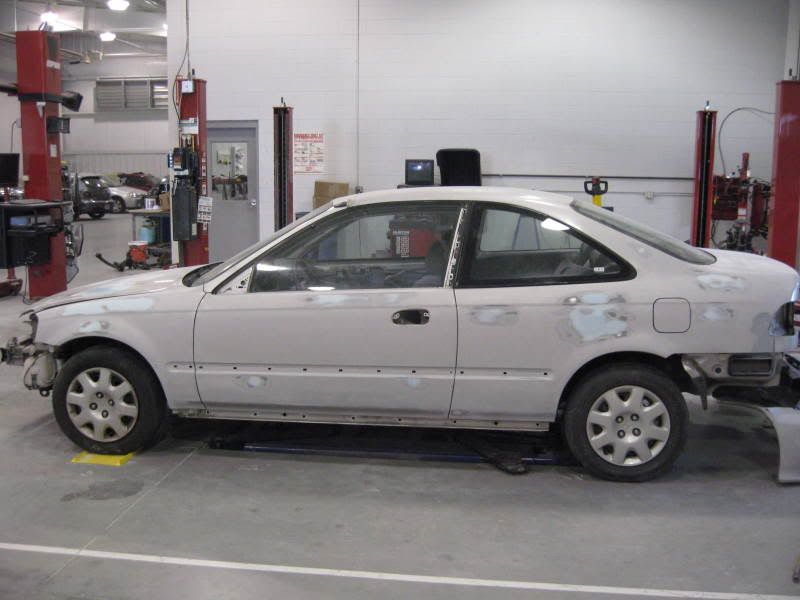
and some young kid step out. it's also gay because people think, o look what his parent's bought him. my dad got the car, true, but it was 500 bucks and was a pos. i did most of the work on the car. my dad did the paint(mostly) i did a little. i did all the motor mods with some help as far as directions go. it's whatever though. i don't care cause i know how hard I've worked to get what i have.
Thread Starter
RagPhoto.net
Joined: Dec 2006
Posts: 956
Likes: 0
From: VIRGINIA BEACH
Re: why is v-tec really better?

+RepCarebearCrew
Joined: Dec 2006
Posts: 17,085
Likes: 0
From: Getting lap dances.
Re: why is v-tec really better?
he went that way... with his accord... im bring him back
Thread Starter
RagPhoto.net
Joined: Dec 2006
Posts: 956
Likes: 0
From: VIRGINIA BEACH


.........
Joined: Feb 2003
Posts: 4,840
Likes: 0

 Re: why is v-tec really better?
And, one other thing you may notice:
Torque peak generally occurs before 4500 RPM. VTEC doesn't activate until after that. The reason VTEC motors produce more "power" is because they maintain more of the torque peak longer. Meaning, that although they don't show the big "peak" numbers, they may very well have a wider actual powerband. That totally depends on application, RPM's turned, gearing, and many other factors.
To the original poster:
If you will PM me specifications, I'll run a DynoSim on it, and give you a comparison.
Helpful information, for a more accurate check:
Bore/Stroke
Actual Compression
Valve Sizes
Full Cam profiles for both heads. IVO/IVC EVO/EVC points included.
Flow-Bench data for the heads in question, including test pressures, with no less than 4 points of reference (valve heights tested.)
Exhaust type used.
Intake type used.
I can send you a dyno graph, plotted points, and spec sheet as tested on the sim.
Torque peak generally occurs before 4500 RPM. VTEC doesn't activate until after that. The reason VTEC motors produce more "power" is because they maintain more of the torque peak longer. Meaning, that although they don't show the big "peak" numbers, they may very well have a wider actual powerband. That totally depends on application, RPM's turned, gearing, and many other factors.
To the original poster:
If you will PM me specifications, I'll run a DynoSim on it, and give you a comparison.
Helpful information, for a more accurate check:
Bore/Stroke
Actual Compression
Valve Sizes
Full Cam profiles for both heads. IVO/IVC EVO/EVC points included.
Flow-Bench data for the heads in question, including test pressures, with no less than 4 points of reference (valve heights tested.)
Exhaust type used.
Intake type used.
I can send you a dyno graph, plotted points, and spec sheet as tested on the sim.
There's almost no torque increase from the 1.8 mm change in stroke.
And, the torque has a LOT to do with the heads. You said it, increased velocity at lower RPM's.
An exception, is the TypeR head. The ports are much straighter, a function of the head being taller, and the tops of the ports raised. This allows a much straighter path for the airflow. Much like a Hemi head, it causes the low-lift flow (What gives you torque, for those who don't know) to be improved. It also allows for very little restriction, and a much more ideal port shape, that doesn't allow the air to "slow down" as it flows through the port. Curves in a port can hurt the flow tremendously.
So....
Take it for what you will. The smaller valves, and smaller ports allow for better low lift flow on the LS head. You swap to a LS/VTEC setup, and the only thing you really gain is some $$ saved by not having to buy a GSR or TypeR bottom end, and a very small amount of displacement. For a Turbo setup, you also end up with less compression than a straight VTEC motor, which can prove benificial. For N/A, there's no need to build a LS/VTEC. B20/VTEC, maybe....
And, the torque has a LOT to do with the heads. You said it, increased velocity at lower RPM's.
An exception, is the TypeR head. The ports are much straighter, a function of the head being taller, and the tops of the ports raised. This allows a much straighter path for the airflow. Much like a Hemi head, it causes the low-lift flow (What gives you torque, for those who don't know) to be improved. It also allows for very little restriction, and a much more ideal port shape, that doesn't allow the air to "slow down" as it flows through the port. Curves in a port can hurt the flow tremendously.
So....
Take it for what you will. The smaller valves, and smaller ports allow for better low lift flow on the LS head. You swap to a LS/VTEC setup, and the only thing you really gain is some $$ saved by not having to buy a GSR or TypeR bottom end, and a very small amount of displacement. For a Turbo setup, you also end up with less compression than a straight VTEC motor, which can prove benificial. For N/A, there's no need to build a LS/VTEC. B20/VTEC, maybe....

Racetracks
Joined: Nov 2002
Posts: 15,668
Likes: 0
From: How long is a piece of string?
Re: why is v-tec really better?
Torque peak generally occurs before 4500 RPM. VTEC doesn't activate until after that. The reason VTEC motors produce more "power" is because they maintain more of the torque peak longer. Meaning, that although they don't show the big "peak" numbers, they may very well have a wider actual powerband. That totally depends on application, RPM's turned, gearing, and many other factors.
Gearing has nothing to do with power output from an engine.
VTEC engines make more power (HP) because they rev to higher RPM..
Higher RPM engines with a whatever torque curve will always make more power than lower RPM engines with the same (but lower RPM) torque curve. HP is mathematically derived from torque and RPM, so the same torque output at higher RPM means more HP.
None of this is anything new..
Last edited by Fabrik8; Sep 20, 2007 at 09:42 PM.

Slowest HRC Member
Joined: Jul 2007
Posts: 553
Likes: 0
From: Hampton Roads
Re: why is v-tec really better?
VTEC engagement is set from the factory to be just out of the range of normal driving, to keep fuel economy and smooth drive-ability the best. You don't really want to engage VTEC just before every shift..
Gearing has nothing to do with power output from an engine.
VTEC engines make more power (HP) because they rev to higher RPM..
Higher RPM engines with a whatever torque curve will always make more power than lower RPM engines with the same (but lower RPM) torque curve. HP is mathematically derived from torque and RPM, so the same torque output at higher RPM means more HP.
None of this is anything new..
Gearing has nothing to do with power output from an engine.
VTEC engines make more power (HP) because they rev to higher RPM..
Higher RPM engines with a whatever torque curve will always make more power than lower RPM engines with the same (but lower RPM) torque curve. HP is mathematically derived from torque and RPM, so the same torque output at higher RPM means more HP.
None of this is anything new..
Gearing has everything to do with power output from an engine. If it's not geared to take advantage of the RPM's used, the "useable" powerband will suck. Hence, why, a TypeR trans is geared shorter.
If you rev an LS to the same RPM, it will make far less power up top? Why? Because the cam profile dictates that. And LS motors already idle a little high compared with most other 4 cylinder designs, which feature much milder cam profiles. VTEC cam profiles dictate it should make more power up top. The HP will quit increasing at some RPM point, and start decreasing, as torque falls faster than RPM increases. Otherwise, they'd build these motors to turn 25,000 RPM......
You general problem is that you're assuming the same torque curve. It's NOT. The LS peaks sooner, and falls off faster. If the LS had the same profile as the VTEC lobes, it simply wouldn't Idle well.
No, none of it is new. These principles have been around almost since the automobile engine was invented in reality.
Slowest HRC Member
Joined: Jul 2007
Posts: 553
Likes: 0
From: Hampton Roads
Re: why is v-tec really better?
Turbo, or Non-Turbo? Remember, on a Turbo car, Profile has an effect on when the turbo spools, but the point at which the turbo reaches full spool is usually the torque peak for the engine. N/A, it's much sooner as a general rule!